What exactly is open cell spray foam, and how's it different from closed cell?
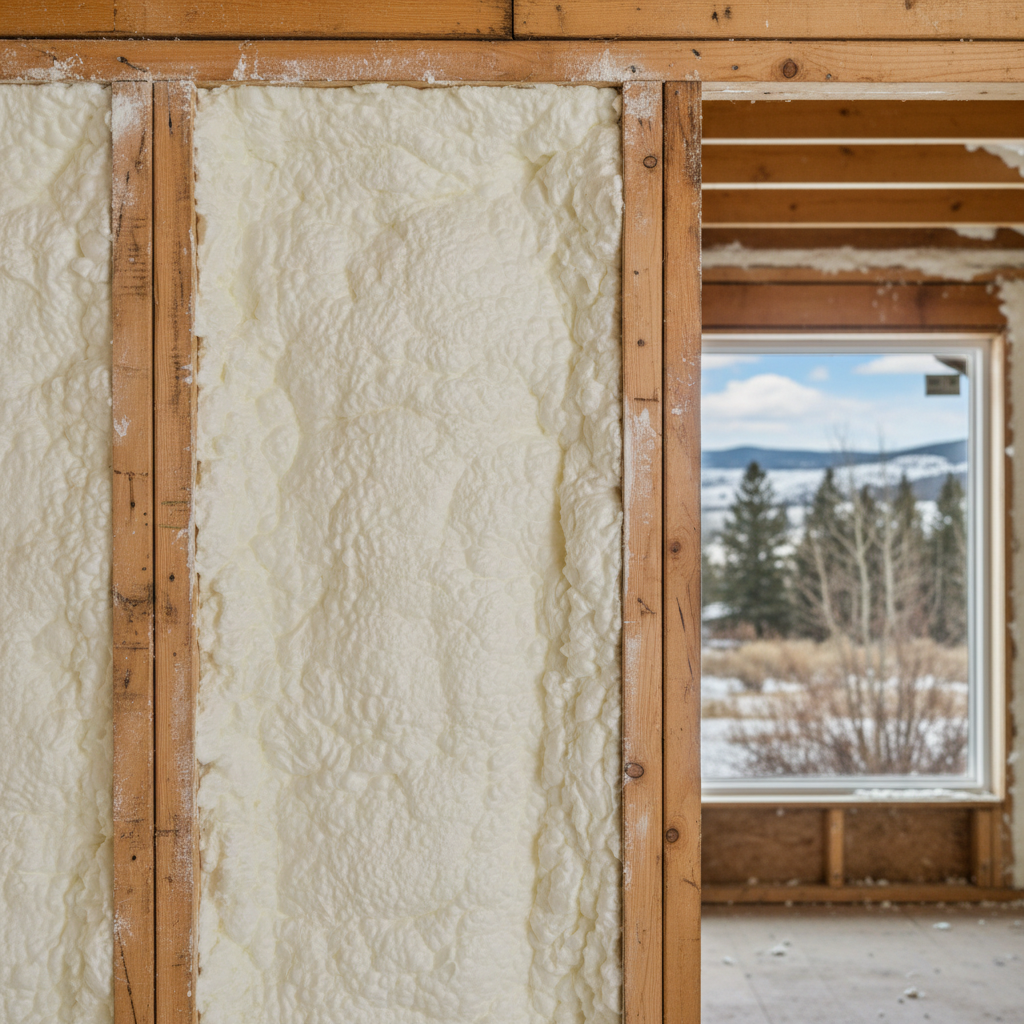
Alright, let's clear this up right from the start. When we talk about open cell spray foam, we're looking at a product that's lighter and less dense than its cousin, closed cell. Imagine it like a sponge – it's got these tiny, interconnected cells that aren't fully sealed off. That's why it feels softer and more flexible once it cures. Typically, it has a density of about 0.5 pounds per cubic foot. Closed cell, on the other hand, is much denser, around 2 pounds per cubic foot, and those cells are completely sealed. That makes closed cell rigid, a vapor barrier, and it even adds structural strength. Open cell is really more about air sealing and thermal resistance, not so much about blocking moisture or making your walls stronger.
Where does open cell spray foam make the most sense in a Laurel home?
From what I've seen around Laurel, especially in those older homes up on the north side of town with their drafty attics, open cell is a fantastic choice for areas that don't need a vapor barrier and where you want excellent air sealing. We're talking attics, particularly if you're conditioning that space, and often in rim joists in basements or crawl spaces. It's great for filling odd-shaped cavities and getting into all those nooks and crannies that batts or even blown-in insulation just can't touch. It expands a lot, so it really seals things up tight, stopping those drafts cold. It's also a good option for interior walls if you're looking for sound dampening between rooms, which is a nice bonus, right?
Does open cell spray foam really help with soundproofing?
You bet it does. Because of its cellular structure – those open, interconnected cells – it's really good at absorbing sound waves. It won't make your house soundproof like a recording studio, but it definitely makes a noticeable difference. If you've got a noisy teenager's room, a home office, or even just want to quiet down the plumbing sounds in a wall, open cell spray foam can cut down on airborne noise transmission significantly. It's one of those benefits people often overlook but really appreciate once it's in.
Is open cell spray foam a good choice for our cold Laurel winters?
Absolutely, it holds its own against our Montana winters. The main thing open cell does is create an incredible air seal. In our climate, a lot of heat loss isn't just conduction through materials; it's air leakage. Warm air escaping, cold air getting in. Open cell expands to fill every gap, crack, and crevice, stopping that air movement dead. This means your furnace isn't working overtime just to heat air that's immediately escaping. Combine that with its decent R-value (around R-3.7 to R-3.9 per inch), and you've got a very effective thermal barrier for keeping your home warm when the temperatures drop well below zero, which they often do around here.
What about moisture? Will open cell spray foam cause problems in our climate?
This is a common question, and it's an important one. Open cell spray foam is permeable, meaning it can absorb and release moisture. It's not a vapor barrier. This is why we generally don't recommend it for exterior walls below grade or in areas where it might get consistently wet, like a crawl space with ground moisture issues without proper encapsulation. In an attic, if you have a roof leak, open cell will show you the leak because it will get wet. Closed cell, conversely, would hide it. For most applications in Laurel, like attics or above-grade walls, as long as your building envelope is sound and you don't have existing moisture problems, open cell performs just fine. You've got to make sure your ventilation is good, especially in attics, but that's true for any insulation.
How long does open cell spray foam last, and does it settle or break down?
Once open cell spray foam is installed and cured, it's pretty much there for the long haul. We're talking decades, often for the lifetime of your home. Unlike some other insulation types, it doesn't settle, sag, or compact over time. It adheres directly to the surfaces it's sprayed onto, creating a monolithic, seamless layer. It won't break down or decompose, and it's not a food source for pests. So, you install it once, and you're done. That's one of the big advantages and why folks choose Elite Insulation Solutions for this kind of work – you get a durable, long-lasting solution.
Are there any downsides or things I should be aware of with open cell?
Yeah, there are a few things to keep in mind. First, as I mentioned, it's not a vapor barrier. So if you need that, like in a basement wall against the earth, you'd want closed cell or a separate vapor barrier. Second, the installation process needs to be done right. There's an odor during and shortly after application, so you'll need to vacate the house for at least 24 hours, sometimes longer depending on ventilation. It's crucial to have experienced pros doing the job to ensure proper mixing and application. Also, it's not as high R-value per inch as closed cell, so if space is extremely limited and you need maximum R-value in a thin layer, closed cell might be better. But for most applications where you have the depth, open cell is a very cost-effective and efficient insulator.