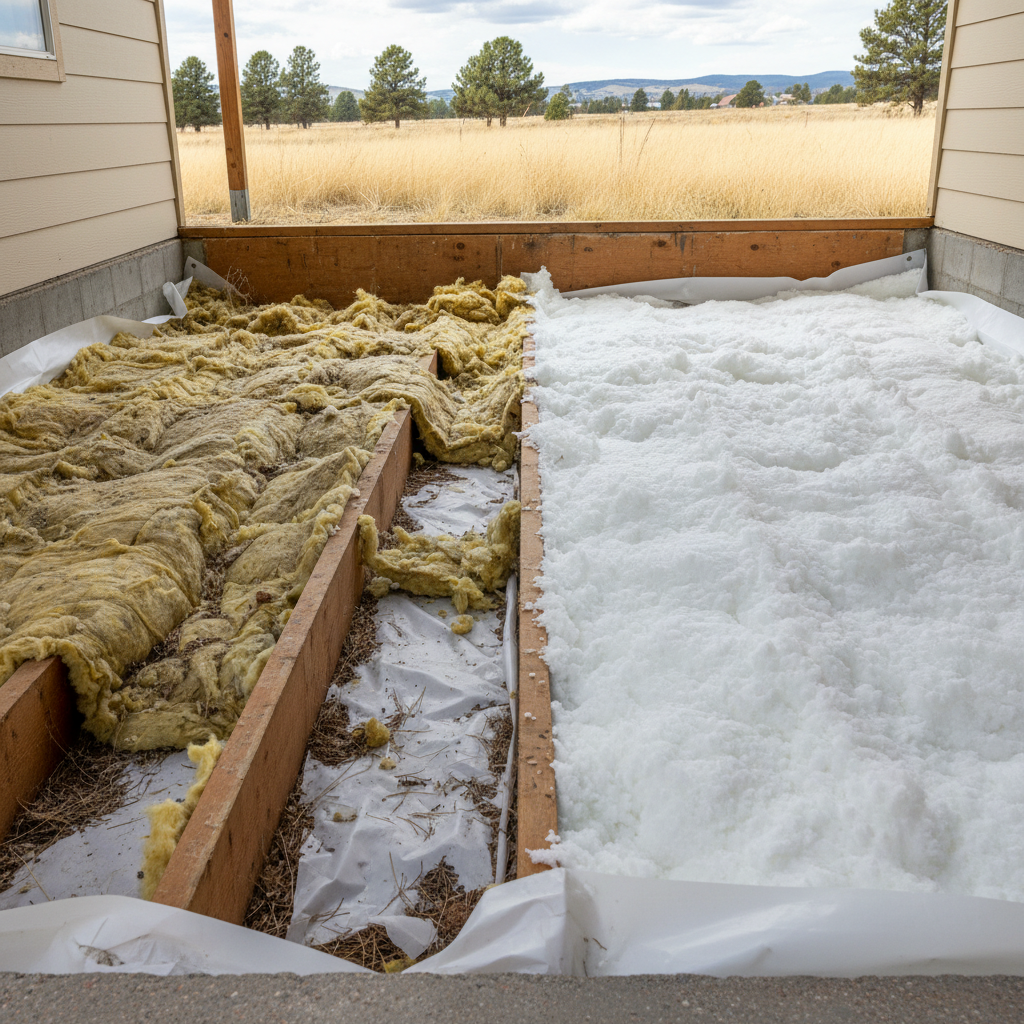
So, you've got this crawl space under your house, right? And you're probably wondering what to do with it. Maybe it's freezing down there, or maybe it's just plain damp. Or perhaps your energy bills are simply through the roof. When it comes to insulating that tricky space, you've generally got two main options: you can insulate the floor right above it (usually with batts) or you can insulate the crawl space itself and seal it all up – that's encapsulation. I've been in more crawl spaces than I can count across Laurel, from those charming older homes downtown to the newer builds out near the golf course, and I've definitely seen what works and what absolutely doesn't.
The Old-School Way: Batts Between Joists
This is usually what pops into most people's heads first. You're essentially sticking insulation, typically fiberglass or mineral wool batts, right up against the subfloor, nestled between the floor joists. The whole idea here is to create a thermal barrier, separating your cozy living space from the cold, unconditioned crawl space below.
Cost
Upfront, batts are almost always cheaper to put in. It's a more straightforward job, uses less material, and doesn't require as much labor. If you're handy and don't mind squeezing into tight spots, you could probably even DIY this. For a professional installation, you're looking at a lower initial cost compared to encapsulation.
Durability & Maintenance
Here's where batts can really fall short, especially with our Montana climate. Laurel gets its share of moisture, whether it's from spring runoff, high water tables, or just general humidity. Fiberglass batts, bless their hearts, are notorious for soaking up water. Once they get wet, they lose their R-value, start to sag, eventually fall down, and become a perfect little nursery for mold and mildew. Honestly, I've pulled out so many soggy, moldy batts over the years, it's just not funny anymore. Plus, they offer zero protection against pests like rodents, who absolutely love to nest in them. Not ideal.
Appearance
Well, it's a crawl space, so "looks" aren't usually the top priority. But when batts are installed correctly, they look pretty neat and tidy, filling those joist bays. When they start to sag or fall, though, it's a real mess, and that's usually a red flag for bigger problems brewing.
The Modern Approach: Crawl Space Encapsulation
Encapsulation is a whole different animal. Instead of just insulating the floor above, you're actually treating the crawl space as part of your home's conditioned envelope. This means insulating the crawl space walls (often with rigid foam board), rolling out a heavy-duty vapor barrier across the entire floor and up the walls, sealing all the seams, and often, putting in a dehumidifier. Sometimes you'll still insulate the rim joists too, just for good measure.
Cost
No point in sugarcoating it: encapsulation costs more upfront. You're using more materials, and it's a more involved, specialized installation process. But think of it less as an expense and more as an investment in your home's long-term health and efficiency, not just some quick patch job.
Durability & Maintenance
This is where encapsulation really shines, especially for us folks here in Montana. By sealing off the crawl space from the outside air and ground moisture, you're creating a dry, stable environment. The rigid foam board insulation doesn't care about moisture, and that vapor barrier stops ground moisture dead in its tracks. This dramatically cuts down on the risk of mold, mildew, and wood rot. It also keeps pests away because you're eliminating their entry points and their favorite damp hangouts. Maintenance is pretty minimal; mostly just checking on the dehumidifier if you've got one.
Appearance
An encapsulated crawl space looks clean, bright, and dry. It's not just functional, either; it transforms what's usually a dark, dirty, and damp area into a usable, healthy space. You could even use it for storage without worrying about your stuff getting ruined. Imagine that!
My Recommendation for Laurel Homeowners
For homes in Laurel, considering our crazy temperature swings and the potential for ground moisture, I'm almost always going to lean towards crawl space encapsulation. Here's exactly why:
- Moisture Control: This is a huge deal. Batts simply can't stand up to moisture like encapsulation can. A dry crawl space means a healthier home, better air quality, and no worries about wood rot or mold.
- Energy Efficiency: By bringing that space into your home's thermal envelope, your HVAC system won't have to work nearly as hard. You'll actually feel the difference, with warmer floors in winter, and your energy bills will definitely thank you.
- Long-Term Value: Sure, the initial cost is higher, but encapsulation's durability and benefits far outweigh the short-term savings you get with batts. You're solving problems for good, not just slapping on a band-aid. It adds real, tangible value to your home.
- Pest Deterrence: Who wants mice, spiders, or other creepy crawlies setting up shop under their house? Encapsulation helps keep them out, plain and simple.
Look, I totally get it. Money's always a factor. If your budget absolutely won't stretch for encapsulation right now, and your crawl space is bone dry with no history of moisture issues, then properly installed rigid foam board between the joists is a much better alternative to fiberglass batts for insulating the subfloor. But if you're truly looking for the best, most durable, and most effective solution for your Laurel home — especially if you've got any dampness or cold floors — encapsulation is definitely the way to go. Give us a call at Elite Insulation Solutions, and we can come take a look at your specific situation and give you an honest assessment. No pressure, just facts.