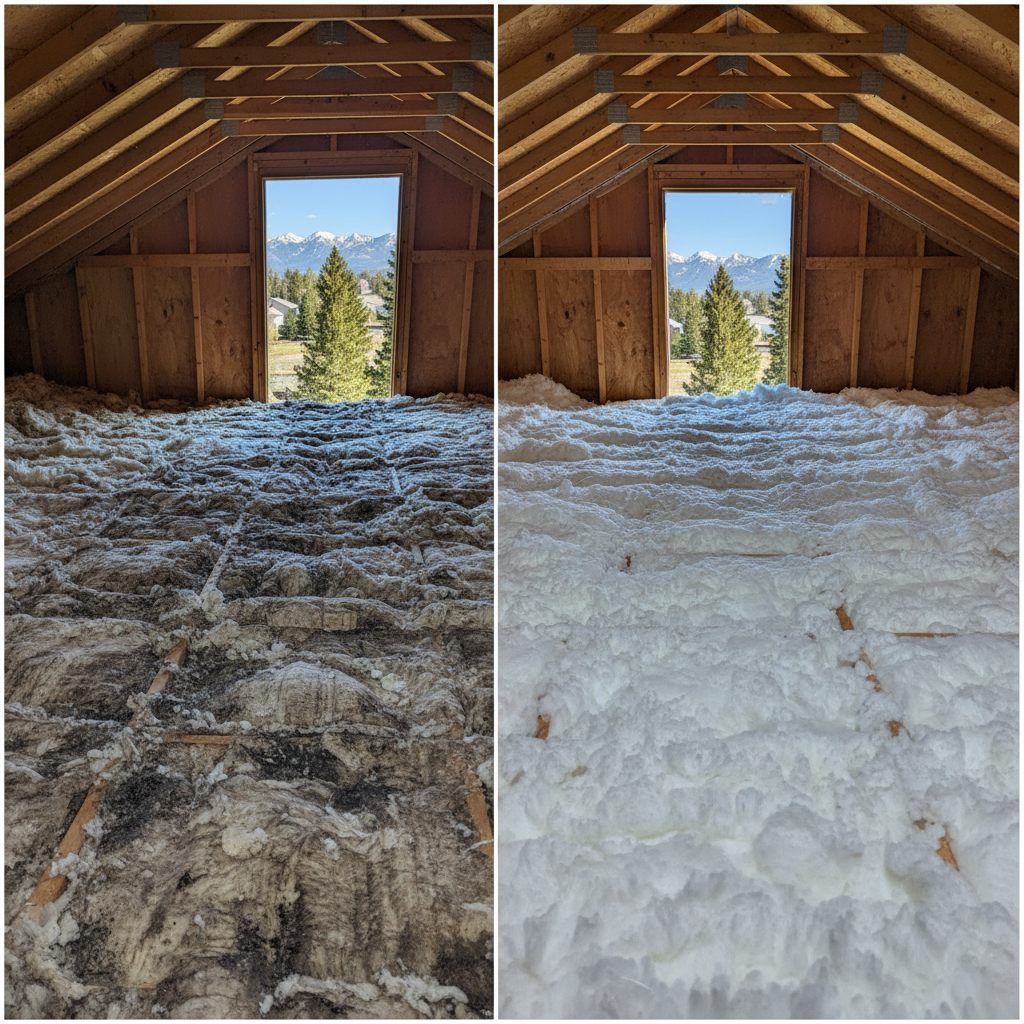
Ever walk into your upstairs rooms in January and feel like the heat is escaping straight through the roof? If you live around Laurel, you already know how brutal winter winds off the Yellowstone River can get. Upgrading your attic insulation is usually the fix, but then you hit a roadblock: do you go with traditional blown-in insulation or spray foam?
Elite Insulation Solutions gets asked this question all the time. Homeowners want a straight answer without the sales pitch. We will break down how these two approaches actually stack up against each other under local conditions.
The Upfront Cost Difference
Let us talk money first because budget matters. Blown-in cellulose or fiberglass is considerably cheaper to install. If you have a standard ranch-style home or an older property downtown and want to boost your R-value without draining your savings account, blown-in cellulose gets the job done quickly. You are paying mostly for the material depth and the time it takes to fill the space.
Spray foam, on the other hand, requires a larger initial investment. Whether you choose open-cell or spray foam, the chemical components and the specialized equipment needed for application drive the price up. It is a bigger hit to the wallet today, which makes many homeowners pause.
Durability and Maintenance Over Time
Upfront price tags only tell half the story. Blown-in insulation can settle over the years. It also absorbs moisture if you ever deal with a minor roof leak or condensation buildup during those heavy freeze-thaw cycles we get in spring. When blown-in insulation gets wet, it loses its thermal resistance and can even pack down, leaving bare spots at the top of your ceiling joists.
Spray foam acts completely differently. Once spray foam cures, it stays put. Spray foam will not sag, settle, or shift. Even better, closed-cell spray foam forms a solid moisture barrier. If ice dams form on your eaves during a heavy snow year, spray foam will not soak up melting water like a sponge.
Appearance and Practicality
Neither option wins beauty pageants because they live hidden away in your attic. But spray foam changes the entire dynamic of your roof deck. By spraying the underside of the roof deck rather than the attic floor, you bring your attic into the conditioned space of your home. Blown-in insulation stays on the floor, keeping the attic unconditioned and cold.
Our Recommendation for Laurel Homes
Here is what makes the most sense for our local climate. If you are on a tighter budget and just need to get your attic up to code compliance with a solid R-38 or R-49 layer, blown-in cellulose is a reliable workhorse. Blown-in cellulose performs well and keeps heating bills reasonable for homes in Laurel.
If you plan on staying in your house for the long haul, want to eliminate drafty cold spots entirely, and want superior air-sealing against winter gales, spray foam is the winner. Elite Insulation Solutions looks at every roof differently. Call Elite Insulation Solutions for attic insulation work in Laurel, MT.