Do I really need to worry about my attic insulation? My house feels fine.
You might think your house feels fine, but I bet it could feel a whole lot better, and cost you less to heat and cool. Here's the deal: most homes, especially older ones around Laurel built before the 90s, just don't have enough insulation in the attic. Building codes have changed, you know. What was considered 'good enough' back then isn't cutting it now. You might be comfortable, sure, but your furnace and AC are probably working overtime to keep it that way. That means higher utility bills every single month.
Think about it this way: your attic is the first line of defense against our crazy Montana weather. Those scorching summer days we get, or the bitter cold snaps in winter? Your attic takes the brunt of it. If your insulation isn't up to snuff, that heat or cold just blasts right through into your living space. We've seen homes where the attic temperature hits 130 degrees in July, and the homeowner wonders why their AC can't keep up. It's not magic, folks. It's physics. Good insulation keeps that extreme temperature where it belongs – out of your house.
How much insulation should I have in my attic? What's an 'R-value'?
This is one of the most common questions I get, honestly. For our climate here in Laurel, the Department of Energy suggests an R-value between R-49 and R-60 for attics. What's R-value? It's just a way to measure thermal resistance – how well the insulation stops heat from moving through it. The higher the R-value, the better it insulates.
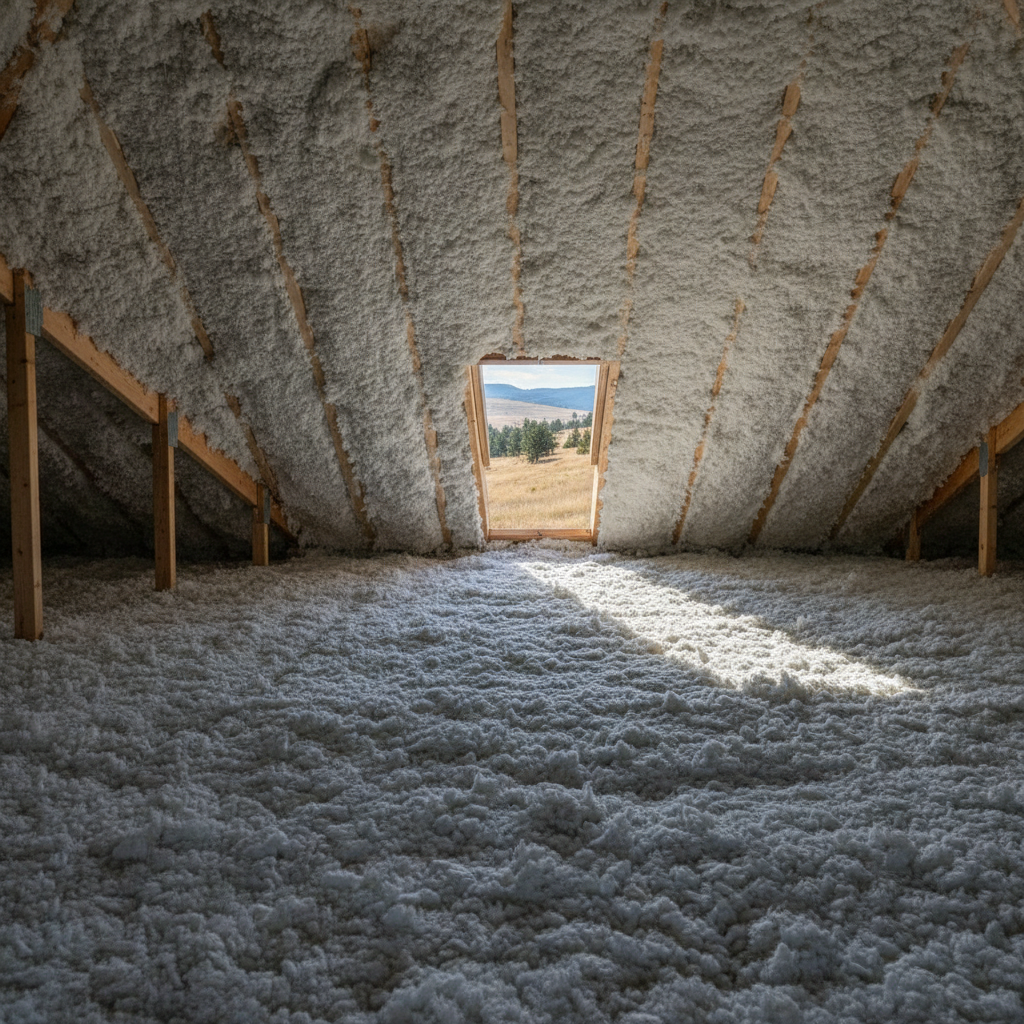
Now, what does R-49 or R-60 actually look like? Well, it depends on the material. If you've got fiberglass batts, you're probably looking at 16-20 inches of insulation to hit R-49 to R-60. With blown-in fiberglass or cellulose, it might be closer to 14-18 inches. When I'm up in attics around the Park City area, I often see maybe 6-8 inches of old, matted-down insulation. That's nowhere near enough, is it? We're talking R-19 or R-22 at best. You're basically throwing money out the window with that kind of setup.
Can I just add new insulation on top of my old stuff?
In most cases, yes, absolutely. This is often the most cost-effective way to boost your attic's R-value. As long as your existing insulation is dry, free of mold, and not infested with pests, we can typically blow new insulation right over the top. We call this 'topping off'. It creates a continuous, thicker blanket of insulation, making your home much better at holding its temperature.
However, there are exceptions. If your old insulation is wet, moldy, or has been contaminated by rodents, then we'd recommend getting rid of it first. You definitely don't want to trap moisture or biohazards under new insulation. We'll always do a thorough inspection of your attic before suggesting a plan. Sometimes, especially in older homes with very little existing insulation, we might need to address things like air sealing first, but we'll get to that.
What's 'air sealing' and why is it important with insulation?
Alright, this is huge, and it's something a lot of folks overlook. Think of your attic as a leaky bucket. You can pour all the insulation (water) you want into it, but if there are holes (air leaks), it's still going to drain out. Air sealing is the process of finding and sealing up all those little cracks, gaps, and openings in your attic floor. These let conditioned air from your living space escape into the attic, and unconditioned attic air get into your house.
These leaks are everywhere: around plumbing stacks, electrical wires, recessed light fixtures, chimney chases, and even that tiny gap between your drywall and top plates. Without proper air sealing, warm air rises from your house into the cold attic in winter, and cool air escapes in summer. This creates drafts, makes your HVAC system work harder, and significantly reduces how well even the best insulation performs. At Elite Insulation Solutions, we see air sealing as a critical first step before adding new insulation. It's like putting a lid on that leaky bucket before you fill it.
Will new attic insulation help with ice dams?
Yes, it absolutely can, and it's one of the best ways to prevent them. Ice dams form when heat from your home escapes into the attic, warming the roof deck. This melts the snow on your roof, which then runs down to the colder eaves (those overhangs that aren't over your heated living space). There, the melted water refreezes, creating a dam. More melting snow backs up behind this dam, freezes, and builds up, often forcing water under your shingles and into your walls and ceilings.
The main reason for ice dams is heat loss from your living space into the attic. By properly air sealing and adding enough insulation, you stop that heat from ever reaching your roof deck. Your attic stays cold, the snow on your roof melts evenly (or not at all), and you don't get those cycles of melting and refreezing at the eaves. It's a real game-changer for homes that struggle with ice dams every winter.
How long does attic insulation last?
Good quality attic insulation, installed correctly, should last for decades – often the lifetime of your home. Blown-in cellulose and fiberglass, for instance, don't really degrade or lose their R-value over time, assuming they stay dry and undisturbed. Unlike something like a furnace or an AC unit, insulation isn't a mechanical system with moving parts that wear out.
What *can* reduce its effectiveness over time is compression (if someone walks on it or stores heavy items), moisture damage, or pest infestations. That's why it's a good idea to have your attic inspected every few years, especially if you suddenly notice higher energy bills or new drafts. But generally, once you've got good insulation in there, you're set for a very long time. It's one of the best long-term investments you can make in your home's comfort and efficiency, wouldn't you say?